

The 5 Best Spring Trout Flies Every Angler Should Carry
5 Best Spring Trout Flies Every Angler Should Carry
Spring is one of the most productive seasons for trout fishing. As rivers warm and flows rise from snowmelt, trout shift out of their winter lethargy and begin feeding more aggressively. While dry fly action eventually shows up with spring hatches, most trout continue feeding below the surface, making nymphs and other subsurface patterns the most reliable flies early in the season.
If you are stocking your fly box for spring trout fishing, these five proven patterns consistently produce fish across rivers throughout North America.
1. Pat’s Rubber Legs (Stonefly Nymph)

Often called the girdle bug, Pat’s Rubber Legs is one of the most effective stonefly nymph imitations ever created. Stoneflies are active in early spring and become dislodged during high flows, making them an easy meal for trout.
The rubber legs create movement in the current, while the bulky body imitates the size and profile of large stonefly nymphs commonly found in Western rivers.
Why it works
- Large, high-calorie food source
- Easy for trout to see in off-color spring water
- Rubber legs create lifelike movement
Best sizes: 6–10
Best colors: Black, Coffee, Brown/Orange
Tip: Fish it as the point fly in a two-fly nymph rig to help get your setup deep.
2. San Juan Worm

The San Juan Worm is one of the most productive flies for high water and runoff conditions. Rising flows wash worms and other easy meals into the river, and trout take full advantage of it.
Although simple in design, this fly can be incredibly effective when fished near the bottom.
Why it works
- Highly visible in dirty water
- Represents a common food source during runoff
- Simple but hard for trout to ignore
Best sizes: 10–14
Best colors: Red, Wine, Pink
Tip: Fish it behind a stonefly nymph for one of the most reliable spring nymph rigs.
3. Pheasant Tail Nymph

The Pheasant Tail Nymph is one of the most famous fly patterns ever tied. Originally created by Frank Sawyer, this fly imitates mayfly nymphs, which are abundant in nearly every trout river.
Its natural coloration and slim profile make it extremely effective when trout are feeding on smaller aquatic insects.
Why it works
- Matches a wide range of mayfly nymphs
- Natural colors trout recognize
- Works in both clear and slightly stained water
Best sizes: 14–18
Tip: Fish it as a dropper behind a heavier fly like a stonefly or Copper John.
4. Copper John

The Copper John was designed specifically to get flies deep quickly, which is exactly what you need in the higher flows of spring.
Its wire-wrapped body adds weight, while the flashback helps attract trout even in murky conditions.
Why it works
- Heavy enough to reach feeding lanes quickly
- Flash attracts fish in stained water
- Imitates a variety of mayfly nymphs
Best sizes: 12–16
Best colors: Copper, Red, Green
Tip: Use it as the anchor fly in a two-fly rig with a smaller midge or mayfly nymph behind it.
5. Zebra Midge

Midges hatch year-round and are often one of the most abundant food sources available to trout. In early spring, trout frequently key in on these tiny larvae drifting in the current.
The Zebra Midge’s slim profile and simple design make it a highly effective dropper fly when trout are focused on small food.
Why it works
- Represents a primary trout food source
- Extremely effective in clear water
- Great dropper fly behind larger nymphs
Best sizes: 16–20
Best colors: Black/Silver, Red/Silver, Olive
Tip: Fish it as the second fly in a double nymph rig behind a heavier pattern.
Spring Fly Box Essentials
These patterns cover the most important trout food sources in spring: stoneflies, worms, mayflies, and midges.
Spring Trout Fishing FAQs
What flies work best for spring trout fishing?
The most effective spring trout flies are usually subsurface nymph patterns. Proven spring producers include Pat’s Rubber Legs, San Juan Worms, Pheasant Tail Nymphs, Copper Johns, and Zebra Midges.
Should I fish nymphs or dry flies in the spring?
Early in the season, nymphs are usually more effective because trout are feeding deeper in the water column. Fishing a two-fly nymph rig allows anglers to present multiple food sources.
What is the best two-fly rig for spring trout?
A very productive spring setup is a stonefly nymph paired with a San Juan Worm. The stonefly acts as a heavy anchor fly while the worm imitates food washed into the river during runoff.
What flies should I use in high spring runoff?
During runoff, larger and more visible patterns tend to produce best. A combination of Pat’s Rubber Legs and a San Juan Worm is one of the best high-water setups for spring trout fishing.
As seen on ths article
-
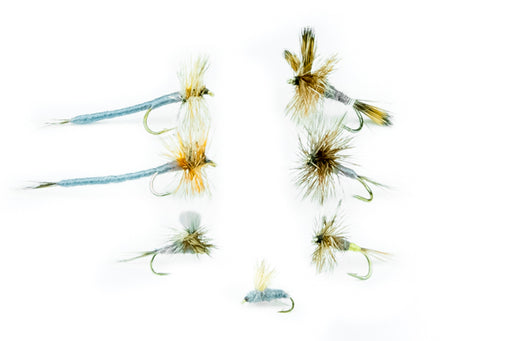
Adams Fly Assortment--24 Flies #1
$23.38Original priceOriginal price $23.38 - Original price $23.38Original price$23.38 - $23.38Current price $23.3824 flies in the Adams family Patterns included are: Adams Adams Female Adams Wulff Comparadun Adams Adams Extended Body Parachute Adams Flies w...
View full details$23.38Original priceOriginal price $23.38 - Original price $23.38Original price$23.38 - $23.38Current price $23.38Value must be grater than or equal to 1. -
All Time Top Ten Trout Flies--20 Flies #2
$19.83Original priceOriginal price $19.83 - Original price $19.83Original price$19.83 - $19.83Current price $19.8320 Fly Assortment, the assortment will be in the most popular sizes and a variety of colors. As voted in American Angler Magazine, the all-time t...
View full details$19.83Original priceOriginal price $19.83 - Original price $19.83Original price$19.83 - $19.83Current price $19.83Coming soonValue must be grater than or equal to 1. -
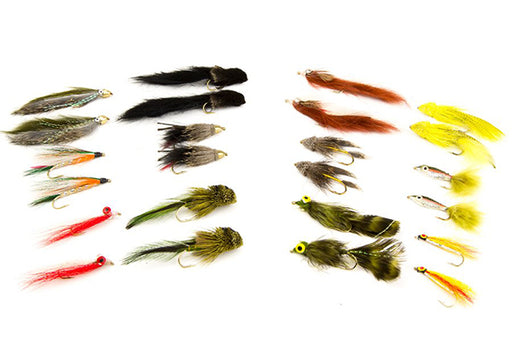
Baitfish and Sculpins--24 Flies #8
$26.57Original priceOriginal price $26.57 - Original price $26.57Original price$26.57 - $26.57Current price $26.57Meaty snacks for big trout! Baitfish and sculpins make up a huge chunk of calorie intake for many trout, especially the big ones. These are tri...
View full details$26.57Original priceOriginal price $26.57 - Original price $26.57Original price$26.57 - $26.57Current price $26.57Value must be grater than or equal to 1. -
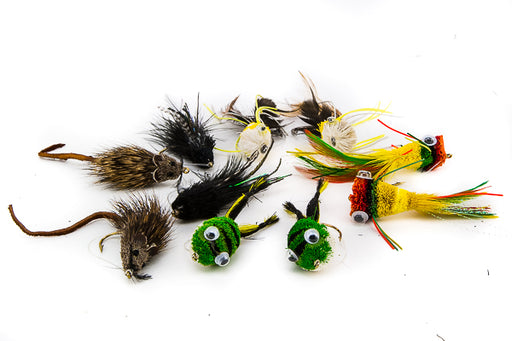
Bass Assortment--10 Flies #9
$32.66Original priceOriginal price $32.66 - Original price $32.66Original price$32.66 - $32.66Current price $32.6610 Bass flies excellent for Largemouth, Smallmouth, Pike and panfish. The assortment includes two flies of our five most popular patterns. The mos...
View full details$32.66Original priceOriginal price $32.66 - Original price $32.66Original price$32.66 - $32.66Current price $32.66Value must be grater than or equal to 1. -
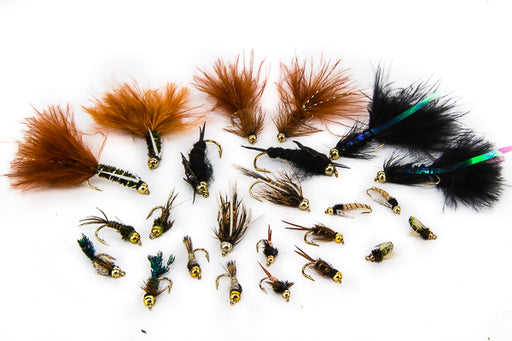
Beadhead Assortment--24 flies #3
$25.04Original priceOriginal price $25.04 - Original price $25.04Original price$25.04 - $25.04Current price $25.0424 of the most popular Beadhead patterns Sizes may vary based on availability Including: Beadhead Aggravator - size 6 Beadhead Copper John - s...
View full details$25.04Original priceOriginal price $25.04 - Original price $25.04Original price$25.04 - $25.04Current price $25.04Value must be grater than or equal to 1.