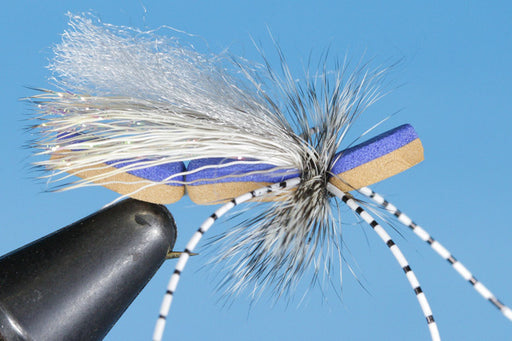
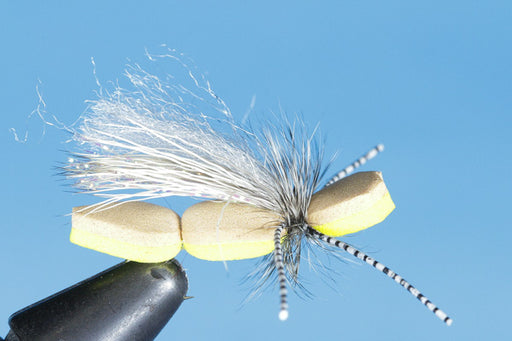
Hoppers & Crickets
Filters
-
V8 Bug
$0.98Original price $1.09Original price $1.09 - Original price $1.09Original price $1.09$0.98 - $0.98Current price $0.98| /An easy to see foam pattern. Drives fish wild, whatever the fish think it is. Sometimes it is best to catch fish now and ask questions later. G...
View full details$0.98Original price $1.09Original price $1.09 - Original price $1.09Original price $1.09$0.98 - $0.98Current price $0.98| /Save 10% Save %Value must be grater than or equal to 1.
Sort by
How to Fish Hopper & Cricket Patterns
Hopper and cricket patterns are highly effective during summer and early fall when terrestrial insects are active along riverbanks. Trout often key on these larger food sources, especially on windy days.
- Fish tight to banks, undercut edges, and grassy areas
- Use a dead drift or slight twitch to imitate struggling insects
- Cover water—trout will move to eat large terrestrials
When to Fish Terrestrial Flies
Terrestrial fishing is most productive during warm months when insects are abundant near the water.
- Best from mid-summer through early fall
- Windy afternoons often produce the most activity
- Effective even when no hatch is present
Fly Selection Tips for Hoppers & Crickets
Trout are less selective when feeding on terrestrials, making these patterns a great option for covering water and finding fish.
- Use larger flies (sizes 6–14) for visibility and attraction
- Foam patterns provide better floatation and durability
- Ant and beetle patterns can be effective when fish are refusing larger flies
Terrestrial Fly Quality & Construction
- Hooks: Chemically sharpened for strong hook sets
- Materials: Durable foam, rubber legs, and buoyant bodies for long-lasting performance
- Profiles: Designed to imitate large terrestrial insects
- Tested: Proven effective on rivers where bank-side feeding is common